
How to Apply Linseed Oil to Wood (Step-by-Step, No Mistakes)
Learn how to apply linseed oil to wood properly. Raw vs boiled linseed oil, drying times, mistakes to avoid, and why linseed oil protects wood naturally.
LINSEED OIL
Dalsberg
1/12/20263 min temps de lecture
As shown in the video, the oil does not stay on the surface like a coating.
It soaks into the wood and progressively stabilizes the fibers from within.
This is what makes linseed oil:
breathable
durable
compatible with exterior wood
Unlike synthetic coatings, it doesn’t trap moisture — it allows the wood to regulate itself naturally.
Linseed oil is a drying oil.
When exposed to air, it polymerizes — meaning it slowly hardens inside the wood fibers.
On wood, linseed oil:
penetrates the surface instead of sealing it
reduces water absorption
slows excessive drying and cracking
keeps the wood flexible instead of brittle
It does not waterproof wood completely — and that’s a good thing.
Moisture can still escape, which prevents rot and internal damage.
That’s why linseed oil has been used for centuries on:
exterior wood siding
barns and outbuildings
fences
furniture
tool handles and joinery
Raw vs boiled linseed oil (important difference)
Raw linseed oil
Very slow drying
Can take several days to weeks to fully cure
Penetrates deeply
Less practical for most exterior projects
Raw linseed oil works, but it requires patience and ideal conditions.
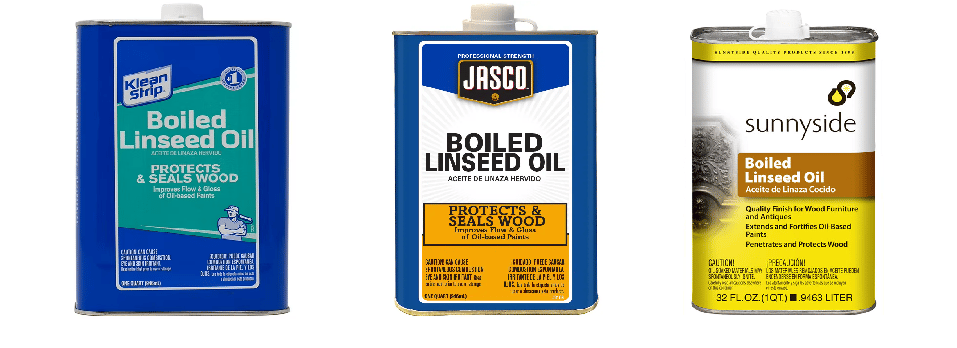
Boiled linseed oil (recommended)
Dries much faster (usually 12–24 hours)
Slightly thicker, easier to control
More forgiving on vertical surfaces
Widely available in North America
Despite the name, boiled linseed oil is not literally boiled.
It’s heat-treated (or modified) to accelerate polymerization.
👉 For most people and most projects, boiled linseed oil is the best choice.
You can find it easily at Home Depot, Lowe’s, or any DIY store.
How to apply linseed oil to wood (step by step)
Step 1 — Prepare the wood
Wood must be dry
Brush off dust and loose fibers
No heavy sanding required
Do not apply linseed oil on wet or damp wood.
Step 2 — Apply the oil
Use a brush or a mop if you are horizontal
Apply a thin, even coat
Work with the grain
Let the oil soak in for 15–30 minutes
The wood should look nourished, not flooded.
Step 3 — Wipe off excess oil (very important)
After soaking time:
Wipe off all excess oil with a clean cloth
Especially on horizontal surfaces, otherwise you will slip.
If oil remains on the surface, it can:
stay sticky
attract dirt
become slippery
This step prevents slides...
Step 4 — Let it dry
Allow 12–24 hours for boiled linseed oil
Longer if temperatures are low or humidity is high
Good ventilation helps.
Step 5 — Optional second coat
On very dry or porous wood, a second coat can be applied after the first one dries.
More is not always better.
Two thin coats are enough.
Is linseed oil good for exterior wood?
Yes — when used correctly.
Linseed oil is especially well suited for exterior wood because:
it doesn’t trap moisture
it moves with the wood
it ages gradually instead of failing suddenly
That’s why it works so well on:
pine
spruce
fir
reclaimed or weathered wood
Does linseed oil protect wood?
Linseed oil protects wood by:
reducing water absorption
slowing drying and cracking
reinforcing surface fibers
It does not replace structural protection or good design.
But as a surface treatment, it significantly improves durability.
This reinforces the paint, especially for winter or harsh conditions.
Common mistakes to avoid
❌ Applying too much oil
❌ Not wiping excess oil
❌ Applying on damp wood
❌ Expecting a glossy or waterproof finish
❌ Using linseed oil where a hard film is required
Linseed oil is about compatibility, not cosmetics.
Linseed oil and breathable wood paint is a must : because pigments fight UV and protect linseed oil.
Linseed oil integrates perfectly with breathable, non-film-forming paints.
When added in small amounts (typically 5–10% of the liquid mix):
it improves water resistance
reduces surface chalking
extends durability
keeps the paint flexible
This is why linseed oil has long been used in heritage barn paint systems.
👉 Learn more: Natural wood finish for Exterior Wood
How linseed oil ages over time
Linseed oil does not peel. It works like a natural stain.
Instead, it:
slowly wears away
fades naturally
can be refreshed easily
No stripping.
No sanding marathons.
Just maintenance that makes sense.
Conclusion
If you’re wondering how to apply linseed oil to wood, the answer is simple:
keep it thin
wipe the excess
let it dry
respect the wood
works better with pigment and paint against UV
Linseed oil doesn’t fight wood.
It works with it.
That’s why it has lasted for centuries — and still works today.

Applying linseed oil to wood is one of the simplest and most affordable and effective ways to protect it — if it’s done correctly.
Linseed oil doesn’t create a plastic coating : the wood finish remains intact.
It penetrates the surface fibers, strengthens them, and lets the wood keep behaving like wood.
This guide explains:
how to apply linseed oil step by step
the difference between raw and boiled linseed oil
drying times and common mistakes
why linseed oil works so well on exterior wood
No marketing. Just how it really works and has worked for decades on heritage barn paint.
What does linseed oil do to wood?
Linseed oil is a drying oil.
When exposed to air, it polymerizes — meaning it slowly hardens inside the wood fibers.
Real example: how linseed oil behaves on wood
In the following video, you can observe how linseed oil penetrates the wood and begins to polymerize.
Instead of forming a surface film, the oil integrates into the fibers and gradually hardens as it reacts with oxygen.
VIDEO: linseed oil application / polymerization (Shorts)
Professional quotes available for large siding and exterior wood projects.

We usually reply within 24-48 business hours
Free shipping included — typically delivered within 6–9 business days across the United States and Canada using trusted carriers. Import duties are currently covered by Dalsberg Paint.
Secure payments : Credit card, PayPal, Bank transfer
DALSBERG® is a registered trademark of Dalsberg Paint. All rights reserved.
Dalsberg Paint – operated by Jean- François Luya, sole proprietorship registered in Sweden
VAT SE800626823201
D-U-N-S® Number 778594247
Visit Dalsberg peintures for France Belgium and Switzerland