
Heritage barn paint — we have improved traditional flour-based paint for exterior wood
Heritage barn paint is a natural exterior wood paint that has been used for centuries to protect wooden buildings.
Its principle is simple:
protect wood without sealing it.
At Dalsberg, we’ve modernized this traditional approach — improving consistency, durability, and ease of use — while keeping the core logic that made these paints last in the first place.
Today, heritage barn paint offers a durable alternative to acrylic paints and synthetic stains, especially for exterior wood siding, cabins, barns, sheds, and other wooden structures.
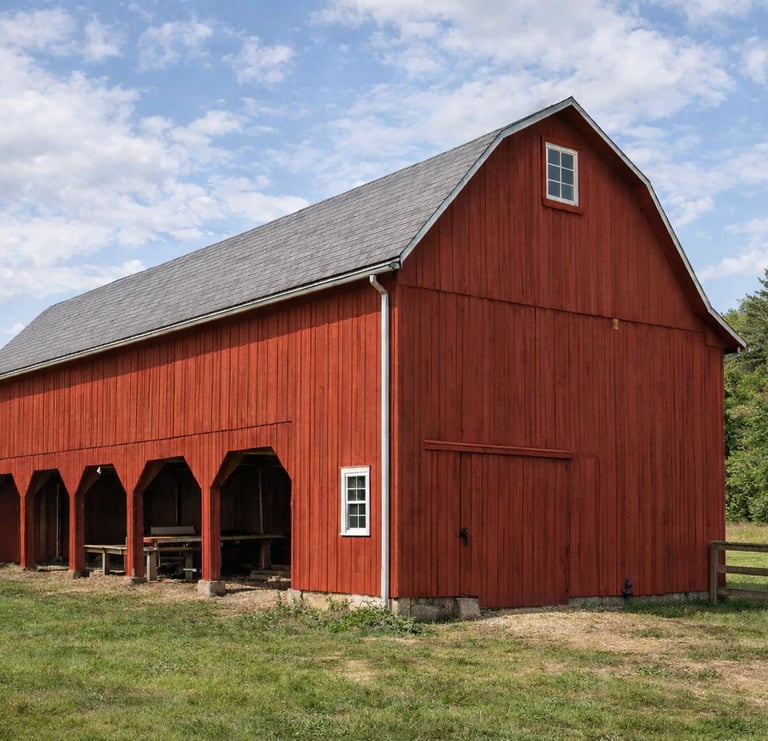
What is traditional flour-based barn paint?
Traditional barn paint is a breathable, mineral-based exterior wood paint made from natural binders, mineral pigments, and plant-based ingredients.
Unlike modern film-forming paints, it does not create a plastic layer on the surface of the wood.
Instead of trapping moisture, it allows the wood to breathe.
It moves with the wood, adapts to seasonal expansion and contraction, and ages gradually — without blistering or peeling.
That continuous breathability is the key to its longevity.
Why heritage barn paint doesn’t peel
Modern paints fail because they seal the surface.
Heritage paint works differently:
no impermeable plastic film
moisture is not trapped in the wood
the coating follows natural wood movement
Water escapes naturally, the wood stays healthy, and the paint wears slowly and evenly instead of detaching in sheets.
The paint even withstands harsh winters.
Even after many years, maintenance stays simple:
a light brushing and a new coat — no stripping, no heavy sanding.
What heritage paint is made of
Historically, flour-based paint used whatever was locally available.
Today, the formulation focuses on the ingredients that actually do the work — still natural, but used with greater precision and consistency.
Key components include:
Mineral pigments — stable color, UV-resistant
Neutralized cellulose — improves adhesion
Casein — reinforces cohesion over time
Boiled linseed oil (optionnal) penetrates wood, water-resistant and improves durability
The result is a fully breathable, non-toxic exterior wood paint — without solvents, acrylics, or synthetic resins.
A paint developed for harsh outdoor conditions
Similar breathable paints existed in many cultures, but it’s in demanding northern climates that barn paint reached its most effective form.
It was designed to handle:
repeated rain and moisture
freeze–thaw cycles
UV exposure
constant wood movement
That’s why Dalsberg paint remains especially well suited for long-term exterior wood protection.
Where heritage barn paint works best
Heritage barn paint performs well on both new and old exterior wood.
Rough or raw wood
Highly absorbent surfaces allow deep penetration.
Grain, knots, and texture remain clearly visible.
Planed or smooth wood
Absorption is lower, resulting in a smoother appearance.
Adhesion and durability remain excellent.
Slight dilution can help reveal more wood grain if desired.
Aged or weathered wood
Older wood benefits the most.
The paint saturates open fibers without trapping moisture, enhancing relief, cracks, and character.
Pressure-treated wood
Compatible once dry.
The paint bonds to the surface layers and neutralizes the greenish tint, restoring natural color depth.
Discover why, this paint is considered one of the best exterior wood paints.
⚠️ Surfaces previously coated with acrylic paint or synthetic stains must be stripped before application.
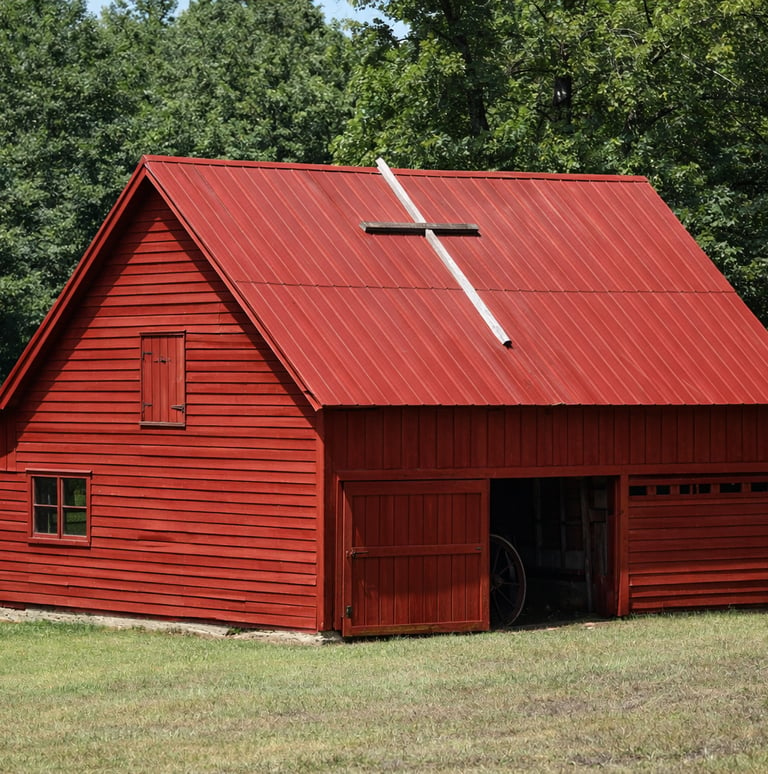
Matte finish — wood remains visible
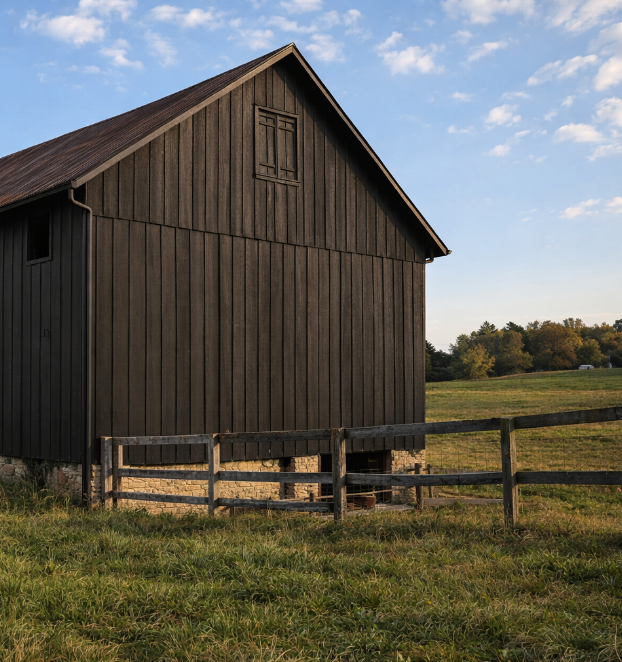
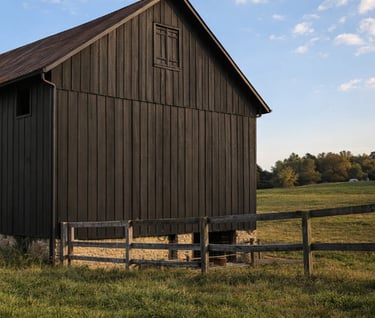
One of the defining characteristics of heritage barn paint is its deep matte finish.
There is no artificial gloss.
No plastic look.
Wood grain, knots, and irregularities remain visible — which is exactly the point.
This finish works equally well on:
traditional barns and cabins
exterior wood siding
contemporary wood architecture seeking a natural, quiet appearance
Simple application — no primer
Application is intentionally straightforward:
clean, dry wood
wide brush or masonry-style brush
No primer.
No complex preparation.
No unnecessary products.
Traditional colors used on barn paint
Modern heritage barn paint is available in powder form, ready to mix with water (and optional linseed oil).
This format offers:
long shelf life
easy shipping
fast preparation
consistent results
It keeps the spirit of traditional barn paint — while making it practical for today’s exterior wood projects.
Frequently asked questions about heritage barn paint
1. How should exterior wood be prepared before applying heritage barn paint?
Preparation is intentionally minimal.
In most cases, a simple brushing is enough to remove dust, loose fibers, and surface debris.
The wood should be clean and dry before application.
No primer is required
2. Can heritage barn paint be applied over previously painted wood?
Only if the existing coating is not film-forming — which is rare.
Most acrylic paints, varnishes, and synthetic stains seal the wood and block absorption.
If the surface is glossy, sealed, or plastic-like, it must be stripped back to bare or breathable wood before applying heritage barn paint.
This step is essential for proper adhesion and durability.
3. How long does heritage barn paint last outdoors?
Typically 7 to 12 years, depending on exposure and wood condition.
Instead of peeling or blistering, the paint ages gradually at the surface.
When a refresh is needed, maintenance is simple:
light brushing followed by a new coat — no stripping or heavy sanding.
4. What colors work best for exterior wood siding or cabins?
Darker mineral colors (barn red, black, dark brown, anthracite) offer excellent protection and integrate naturally into landscapes.
Lighter shades are more challenging to achieve in a single coat and are still being developed.
When used, they create a more contemporary architectural look.
Try the barn paint simulator.
5. What’s the difference between natural paint, stain, and varnish?
Natural paint is matte, breathable, and durable. It protects without sealing the wood.
Stains penetrate deeply but offer shorter protection and require more frequent maintenance.
Varnishes and film-forming paints create a sealed surface that often leads to peeling over time.
Heritage barn paint combines coverage, breathability, and long-term ease of maintenance.
Professional quotes available for large siding and exterior wood projects.

We usually reply within 24-48 business hours
Free shipping included — typically delivered within 6–9 business days across the United States and Canada using trusted carriers. Import duties are currently covered by Dalsberg Paint.
Secure payments : Credit card, PayPal, Bank transfer
DALSBERG® is a registered trademark of Dalsberg Paint. All rights reserved.
Dalsberg Paint – operated by Jean- François Luya, sole proprietorship registered in Sweden
VAT SE800626823201
D-U-N-S® Number 778594247
Visit Dalsberg peintures for France Belgium and Switzerland