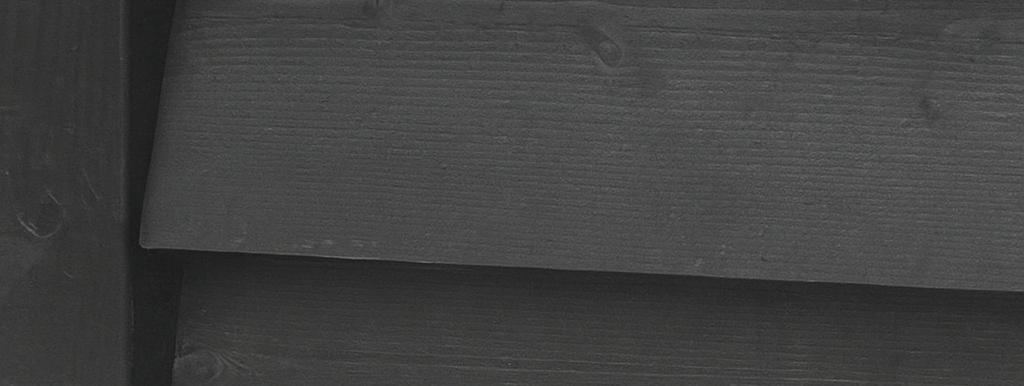
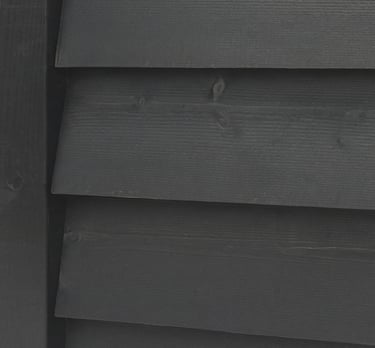
Clapboard siding looks simple — horizontal boards, clean lines, classic American homes.
But painting clapboard siding is one of the most failure-prone exterior wood projects.
Not because people do it wrong.
But because clapboard moves, overlaps, and traps moisture by design.
This guide explains how to paint clapboard siding so it lasts — and why paint behavior matters more than brand or color.
The weight of the boards is horizontal, so it presses down on the wood even with nails.
Why clapboard siding is different from flat wood
Clapboard siding is not a flat surface.
Each board:
overlaps the one below
creates horizontal joints
traps moisture behind the laps
expands and contracts horizontaly with weather
Water enters easily — and escapes slowly. Unless you help it along.
That’s where most paint failures start.
Can you paint clapboard siding?
Yes — clapboard siding can be painted.
But it is much better if the paint allows:
moisture to escape
wood to move
pressure to dissipate
Paints that seal clapboard under a plastic film almost always fail first at the overlaps.
The boards may move a few tenths of a millimeter relative to each other; this is normal for wood. The advantage of Dalsberg paint is that it penetrates the outer layers, so it will slightly pass under the board covering it. This means you should not see any unpainted surface even if the wood moves. Some purists or anxious individuals paint before installation, but this is not necessary.
Why many exterior paints fail on clapboard siding
Most modern exterior paints are film-forming.
They create a flexible synthetic layer that looks perfect — at first.
As long as that film stays elastic, it can:
But there’s a trade-off.
The hidden problem
Clapboard siding absorbs moisture from behind and between boards.
When paint blocks vapor escape:
moisture accumulates inside the wood
pressure builds under the paint film
cracking, blistering, or peeling begins
Sometimes the paint cracks.
Sometimes it stays intact — while the wood underneath deteriorates.
These paints often crack right at the joint, where the boards meet. And yes, the neighboring board does not move as much.
👉 Learn more: Why Old Barn Paint Didn’t Peel
The best paint behavior for clapboard siding
The best paint for clapboard siding is not the strongest film.
It’s the paint that works with the siding design.
Look for paint that is:
✔ Breathable by design
✔ Non-film-forming
✔ Matte or mineral-based
✔ Compatible with wood movement
This allows clapboard siding to dry naturally — even at overlaps.
Film-forming vs breathable paint on clapboard siding
Film-forming paints (acrylic, latex)
Breathable paints (heritage / mineral-based)
👉 Related: Best Exterior Wood Paint — Breathable vs Film-Forming
Application tips specific to clapboard siding
Painting clapboard siding doesn’t require complexity — but it does require restraint.
Best practices:
Light brushing to remove dust
Wood must be dry
Use a wide brush (not a roller)
Work with the grain
One generous coat is usually enough
Avoid overloading the laps — paint should soak in, not pool.
👉 See: Applying Barn Paint — Simple Techniques
Climate matters more than brand
Clapboard siding is especially sensitive in:
Breathable paint performs better because it never traps moisture inside the laps.
That’s why similar paint systems were historically used on barns, cabins, and siding across North America.
So what is the best paint for clapboard siding?
The best paint for clapboard siding is one that:
respects how clapboard is built
allows moisture to escape
fades instead of peeling
simplifies long-term maintenance
That’s why breathable, non-film-forming exterior paints — inspired by traditional barn paint — still make sense today.
They don’t fight clapboard siding.
They let it do what it was designed to do.
👉 Explore: Heritage Barn Paint for Exterior Wood