
Dutch Lap Siding Explained: Best Paint for Durable Exterior Wood
Dutch lap siding is a high-quality exterior wood cladding with overlapping profiles designed to shed water. Learn how it works, why thickness matters, and which paint lasts without peeling.
COMPARISONS
Dalsberg
1/26/20263 min temps de lecture
Dutch lap siding is a traditional exterior wood siding profile defined by its overlapping, beveled boards.
Each board is milled with a recessed top edge and a thicker lower edge, allowing boards to nest into one another.
This creates:
a tight horizontal overlap
a shadow line for visual depth
improved water shedding
greater overall siding thickness
Unlike flat clapboard, Dutch lap siding is engineered to interlock, not just overlap.
That mechanical logic is why it has long been considered a higher-quality exterior siding system.
Why Dutch lap siding is structurally superior
Dutch lap siding is not just a visual choice — it’s a construction choice.
1. Overlap + gravity
The stepped profile naturally directs vind, fog and rainwater outward and downward.
Water has fewer opportunities to:
sit on horizontal edges
penetrate behind the siding
get trapped between boards
This reduces long-term moisture exposure compared to flat profiles.
2. Thicker boards, more tolerance
Dutch lap siding boards are typically thicker than standard clapboard, especially at the lower edge.
This matters because:
thicker wood tolerates movement better
it resists warping and deformation
it cracks less under thermal stress
This extra mass makes Dutch lap siding especially suited to:
cold climates
humid regions
seasonal freeze–thaw cycles
How Dutch lap siding behaves over time
Even with a superior profile, Dutch lap siding is still wood.
That means it will:
absorb moisture
release moisture
expand and contract
age under UV exposure
The difference is that Dutch lap siding moves more evenly because of its thickness and interlocking geometry.
Paint choice must respect that behavior.
Why many exterior paints still fail on Dutch lap siding
This is where problems usually start.
Most modern exterior paints are film-forming (acrylic, latex, alkyd).
They create a continuous synthetic layer on the surface.
At first, this works well — especially on high-quality siding like Dutch lap.
But over time:
moisture enters the wood through joints, fasteners, or end grain
the paint film prevents that moisture from escaping
pressure builds behind the coating
Eventually, one of two things happens:
the paint cracks or peels, at the junction of the boards: it's ugly.
or worse: the paint stays intact while the wood deteriorates underneath
This is not a preparation issue.
It’s a material compatibility issue.
Why breathable paint is better suited to Dutch lap siding
Breathable exterior wood paint follows a different logic.
Instead of sealing the wood, it:
lightly saturates the surface fibers
allows vapor to move outward
adapts to wood movement
On Dutch lap siding, this is especially effective because:
the overlap already protects from bulk water
the paint only needs to manage vapor
pressure never builds behind a rigid film
As a result:
no blistering
no peeling
gradual, predictable aging
👉 Internal link to add: Best Exterior Wood Paint — Breathable vs Film-Forming
Finish choice: matte matters on Dutch lap siding
Glossy finishes look appealing on flat samples — but they are a poor choice for moving wood.
On Dutch lap siding:
gloss highlights imperfections
rigid finishes crack sooner
plastic shine clashes with architectural depth
Matte, mineral-based finishes:
absorb light instead of reflecting it
emphasize shadow lines
age evenly with the wood
👉 Internal link to add: Natural Wood Finish for Exterior Wood
Dark colors on Dutch lap siding: when they work
Dutch lap siding handles dark colors better than many profiles — if the wood is thick enough.
Because dark colors absorb more heat:
thermal movement increases
surface drying accelerates
Dutch lap’s thickness helps counter this.
Best suited dark tones include:
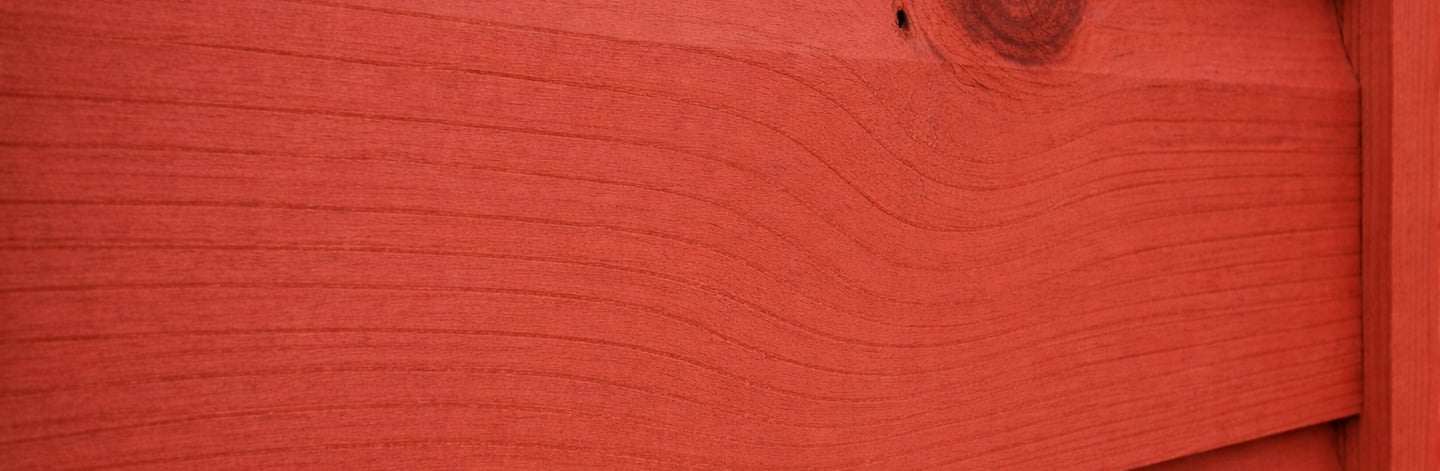
deep red
dark brown
anthracite gray
black (in shaded or ventilated conditions)
Ideal applications:
barns and outbuildings
cabins
garages
shaded or north-facing facades
Less ideal for:
full-sun residential walls without ventilation
👉 Internal link to add: Black Wood Siding: When It Works (and When It Doesn’t)
The role of boiled linseed oil on Dutch lap siding
Boiled linseed oil is optional — but useful.
When added in small amounts, it:
improves water resistance
reduces surface chalking
strengthens fiber saturation
slows excessive drying
On Dutch lap siding, this is particularly helpful for:
exposed elevations
windy locations
cold or variable climates
Because the paint remains breathable, linseed oil:
does not trap moisture
does not form a rigid layer
integrates naturally with the wood
How breathable paint ages on Dutch lap siding
This is one of the biggest advantages.
Instead of peeling, breathable paint:
fades gradually
powders lightly at the surface
disperses slowly with weather
Maintenance becomes:
simple brushing
repainting without stripping
no heavy prep
This is why similar paint systems were historically used on barns and agricultural buildings — including those built with Dutch lap siding.
How to paint Dutch lap siding (simple method)
Light brushing to remove dust
Wood must be dry
Apply with a wide brush
One generous coat
No primer
Optional boiled linseed oil
No complex systems.
No multi-layer buildup.
Unlike Dutch lap siding, board and batten creates strong vertical movement lines that place different stresses on exterior paint films.
Conclusion
Dutch lap siding is already a smart construction choice.
Its interlocking profile, thickness, and water-shedding design make it one of the most durable exterior wood sidings available.
To protect it properly, the paint must respect how the wood behaves.
Breathable, non-film-forming paint:
works with wood movement
prevents trapped moisture
ages honestly
simplifies long-term maintenance
That’s not tradition for tradition’s sake.
That’s common sense applied to exterior wood.
Professional quotes available for large siding and exterior wood projects.

We usually reply within 24-48 business hours
Free shipping included — typically delivered within 6–9 business days across the United States and Canada using trusted carriers. Import duties are currently covered by Dalsberg Paint.
Secure payments : Credit card, PayPal, Bank transfer
DALSBERG® is a registered trademark of Dalsberg Paint. All rights reserved.
Dalsberg Paint – operated by Jean- François Luya, sole proprietorship registered in Sweden
VAT SE800626823201
D-U-N-S® Number 778594247
Visit Dalsberg peintures for France Belgium and Switzerland