
Black Wood Siding: When It Works, When It Doesn’t, and Why
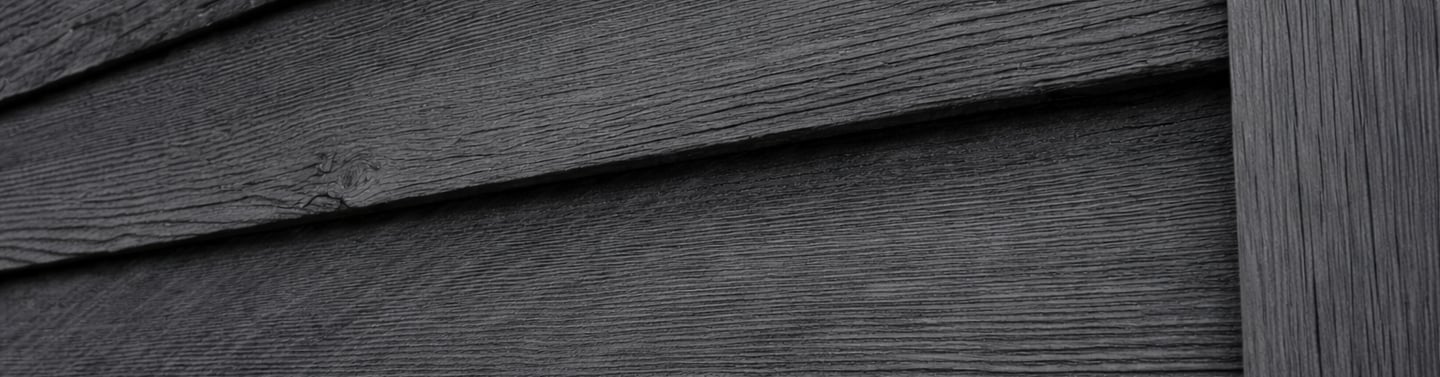
Black wood siding has become a strong architectural statement further than Kentucky — bold, minimal, and timeless.
COLOURS AND FINISHES
Dalsberg
1/22/20263 min temps de lecture
Black wood siding has become increasingly popular — from modern barns to minimalist cabins and outbuildings.
The look is striking.
But black is also the most demanding color you can apply to exterior wood.
To understand when black wood siding works — and when it doesn’t — you need to understand heat, wood movement, and paint behavior, not trends.
Looking for more black wood siding inspiration?
Explore our Pinterest board featuring modern black barns, cabins, sheds, and matte black exterior wood projects.
Why black wood siding behaves differently
Black absorbs more solar energy than any other color. Everyone has tried this in a car.
On exterior wood, this means:
higher surface temperatures
stronger expansion and contraction cycles
more stress on the wood fibers
faster moisture movement
This doesn’t automatically make black a bad choice, because we use specific high resistant pigments.
But it makes wood selection, paint behavior, and building use critical, especially on clapboard siding, which is rarely thick.
A historical note: why some barns in Kentucky were painted black
Black-painted barns were never common everywhere — but they did exist, especially in parts of Kentucky and the Appalachian region.
These barns were often used for tobacco drying.
Black hertitage barn paint helped because it:
absorbed heat even in cool seasons
accelerated drying inside unheated structures
improved airflow-driven curing
These were utility buildings, not homes.
This detail matters, because it shows something important:
Black paint was used where heat gain was useful —
not where comfort or dimensional stability mattered.
Black siding and heat: where it makes sense
Black wood siding works best on buildings that are:
unheated or lightly heated
partially shaded or north-facing
surrounded by vegetation
secondary structures
Examples:
barns
sheds
wood storage buildings
garages
cabins used seasonally
In these cases, black can even be an advantage:
absorbing winter light, helping dry the structure naturally.
Where black wood siding is risky
Black siding is not ideal for:
fully exposed south-facing façades
residential buildings in hot climates
thin or unstable wood sections
On homes, constant heat stress can lead to:
accelerated cracking
exaggerated wood movement
visible joint opening
surface checking
This is physics — not a paint problem.
Wood thickness matters (more than color choice)
Black paint magnifies wood behavior.
That means wood thickness becomes critical.
Softwoods (pine, spruce, fir)
Softwoods are generally more forgiving.
However, for black finishes:
boards should be 20–30% thicker than usual
wider boards perform better than narrow ones
Softwoods tend to develop:
many small cracks rather than large structural splits
This makes them more suitable for black siding.
Hardwoods (oak, chestnut, dense species)
Dense hardwoods behave differently. They are less elastic (the resin from coniferous trees is therefore not just a disadvantage).
Under heat stress, they tend to:
crack less often
but crack much wider
Wide, deep splits are harder to control and more visible. A large crack can split the entire thickness.
For this reason, dense hardwoods are generally less suited for black exterior siding unless carefully designed and protected.
Why breathable paint matters even more in black
With black siding, trapped moisture is the real enemy.
Breathable, non-film-forming paint allows:
vapor to escape
surface fibers to dry naturally
gradual aging instead of failure
Film-forming paints amplify problems:
trapped heat + trapped moisture
blistering
peeling
hidden rot
This is why traditional barn paints performed better — especially in dark colors.
About durability and linseed oil
For black wood siding, boiled linseed oil can be useful, but it’s not magic.
It helps by:
strengthening surface fibers
improving water resistance
reducing surface chalking
However, even with oil:
black siding remains more demanding
design and wood choice still matter
And in harsh climates:
Nothing protects better than physical shelter.
Overhangs, ventilation, and seasonal protection always outperform chemistry.
The honest takeaway
Black wood siding can be beautiful and durable — A natural wood finish.
when used in the right context.
It works best on:
barns
sheds
garages
secondary buildings
shaded or wooded environments
It requires:
thicker wood
breathable paint
realistic expectations
Used blindly on thin, exposed residential façades, it will fail faster — no matter the brand.
Black doesn’t forgive shortcuts.
But when done right, it ages with a quiet, powerful presence. See real black wood siding projects.
Professional quotes available for large siding and exterior wood projects.

We usually reply within 24-48 business hours
Free shipping included — typically delivered within 6–9 business days across the United States and Canada using trusted carriers. Import duties are currently covered by Dalsberg Paint.
Secure payments : Credit card, PayPal, Bank transfer
DALSBERG® is a registered trademark of Dalsberg Paint. All rights reserved.
Dalsberg Paint – operated by Jean- François Luya, sole proprietorship registered in Sweden
VAT SE800626823201
D-U-N-S® Number 778594247
Visit Dalsberg peintures for France Belgium and Switzerland