
Why Do They Paint Barns Red? Iron Oxide, Linseed Oil, and the Real History Behind America’s Iconic Color
Why Do They Paint Barns Red? Iron Oxide, Linseed Oil, and the Real History Behind America’s Iconic Color
COLOURS AND FINISHES
Dalsberg
2/5/20263 min temps de lecture

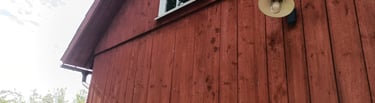
The high concentration of iron oxide gives:
strong UV resistance
deep, stable color
long-lasting performance
This is why red became the most practical choice for exterior wood protection.
The Key Ingredient: Iron Oxide
The deep red color came from iron oxide, a naturally occurring mineral found in soil, clay, and mine waste.
Iron oxide was:
abundant
cheap
easy to grind into pigment
extremely stable under UV exposure
Unlike organic dyes, iron oxide:
doesn’t fade quickly
doesn’t break down in sunlight
actually improves paint durability
This made it ideal for a natural exterior wood finish.
But pigment alone doesn’t make paint.
Flour, Milk, and Natural Binders
Early barn paint wasn’t oil paint as we know it today.
It was closer to a breathable mineral coating.
Traditional recipes — documented in Northern Europe as early as the 1500s — often included:
water
old flour or starch (binder)
iron oxide pigment
old milk
sometimes ash or lime
This type of paint:
penetrated surface fibers
did not form a plastic film
allowed moisture to escape
That breathability was critical for barns, sheds, and agricultural buildings.
The Role of Linseed Oil (and Why It Changed Everything)
By the 17th and 18th centuries, builders in Scandinavia and Northern Europe discovered something important:
Adding small amounts of linseed oil dramatically improved performance.
Linseed oil:
polymerizes slowly in air
strengthens surface fibers
improves water resistance
remains flexible and compatible with wood movement
This knowledge crossed the Atlantic with settlers from:
Sweden
Finland
France
Germany
the Netherlands
Linseed oil didn’t seal the wood — it reinforced it.
That balance is why traditional barn paint lasted so long.
Why Red Was Cheaper Than Other Colors
Another reason barns were red: cost.
Other pigments were problematic:
white (lead-based) — toxic
green (copper-based) — expensive
blue (indigo, lapis) — rare and costly
Iron oxide, by contrast:
came from local soil or old rust
required minimal processing
worked in a single coat
Red wasn’t chosen because it was loved.
It was chosen because nothing else made more sense.
Breathability: Why Old Barn Paint Didn’t Peel
Peeling is a modern problem.
It happens when:
moisture gets trapped
pressure builds under a sealed film
adhesion fails
Traditional barn paint:
formed no rigid film
contained no plastic resins
allowed vapor to pass through
So instead of peeling, it:
faded gradually
thinned evenly
stayed bonded to the wood
This is why old barns weathered gracefully instead of failing suddenly.
👉 Learn more: Why Old Barn Paint Didn’t Peel
Not Just Barns: A Building Logic
The same paint logic was used on:
sheds
fences
cabins
outbuildings
agricultural structures
Anything exposed to weather — but not meant to look “finished.”
The red color became iconic after the fact.
Why This Still Matters Today
People don’t search “why are barns painted red” out of nostalgia.
They sense that:
old buildings lasted longer
maintenance was simpler
materials behaved differently
They’re right.
Modern coatings solve some problems — and create others.
A Principle Worth Keeping
Red barn paint wasn’t magic.
It was:
mineral pigment
simple binders
breathable behavior
honest aging
No miracle additives.
No marketing promises.
Just materials that respected wood.
That principle still works today — especially on exterior wood.
Red barns was everywhere across the American, Canadian, and European countryside.
So common that the color feels almost symbolic — as if barns were meant to be red.
Explore dozens of real barn paint color ideas on Pinterest, including Barn Red finishes.
But the truth is far more practical.
Barns were painted red not for tradition, not for decoration, and not for symbolism, but because red paint was the most affordable, and effective protection available for exterior wood.
This is why people still ask today:
why do they paint barns red?
Real example: red barn painted with breathable paint
In the video below, a wooden barn is painted using a breathable red barn paint inspired by traditional formulations.
The result shows how the color enhances the wood while preserving its texture and natural behavior.

As shown here, the finish is matte, deep, and integrated into the wood — not sitting on top of it.
This is exactly how traditional barn paint behaved:
no plastic film
no surface cracking
natural aging over time
The goal was not decoration, but long-term protection.
To understand the answer, we need to go back to a time before paint was an industry.
Before Modern Paint: Farmers Made Their Own
Until the late 19th century, commercial paint was rare and expensive in rural areas.
Most farmers:
mixed their own coatings
used local, available materials
relied on inherited European building knowledge
cared about protection, not appearance
Paint wasn’t decorative.
It was functional.
The goal was simple:
slow rot
resist moisture
survive sun and weather
cost as little as possible
Red iron oxide happened to solve all of these problems at once.
Application of red barn paint on raw wood
This example shows how red barn paint is applied directly onto raw wood.
The pigment-rich coating spreads easily and covers the surface while still allowing the wood grain to remain visible.

People Also Ask
Why are barns painted red?
Because red paint was cheap, durable, and easy to make using iron oxide. It protected wood better than early commercial paints.
Was barn red paint made from rust?
Often yes. Iron oxide, chemically similar to rust, was ground into pigment and mixed with natural binders.
Why is red paint good for wood?
Iron oxide blocks UV damage, while breathable binders allow moisture to escape — preventing peeling and rot.
Professional quotes available for large siding and exterior wood projects.

We usually reply within 24-48 business hours
Free shipping included — typically delivered within 6–9 business days across the United States and Canada using trusted carriers. Import duties are currently covered by Dalsberg Paint.
Secure payments : Credit card, PayPal, Bank transfer
DALSBERG® is a registered trademark of Dalsberg Paint. All rights reserved.
Dalsberg Paint – operated by Jean- François Luya, sole proprietorship registered in Sweden
VAT SE800626823201
D-U-N-S® Number 778594247
Visit Dalsberg peintures for France Belgium and Switzerland